

Decentralized Identity (DID) Beyond KYA: What’s Next for Web3 Authentication
Discover how decentralized identity is transforming Web3 login methods by using privacy-focused checks, Zero-Knowledge Proofs, and secure identity systems on the blockchain.
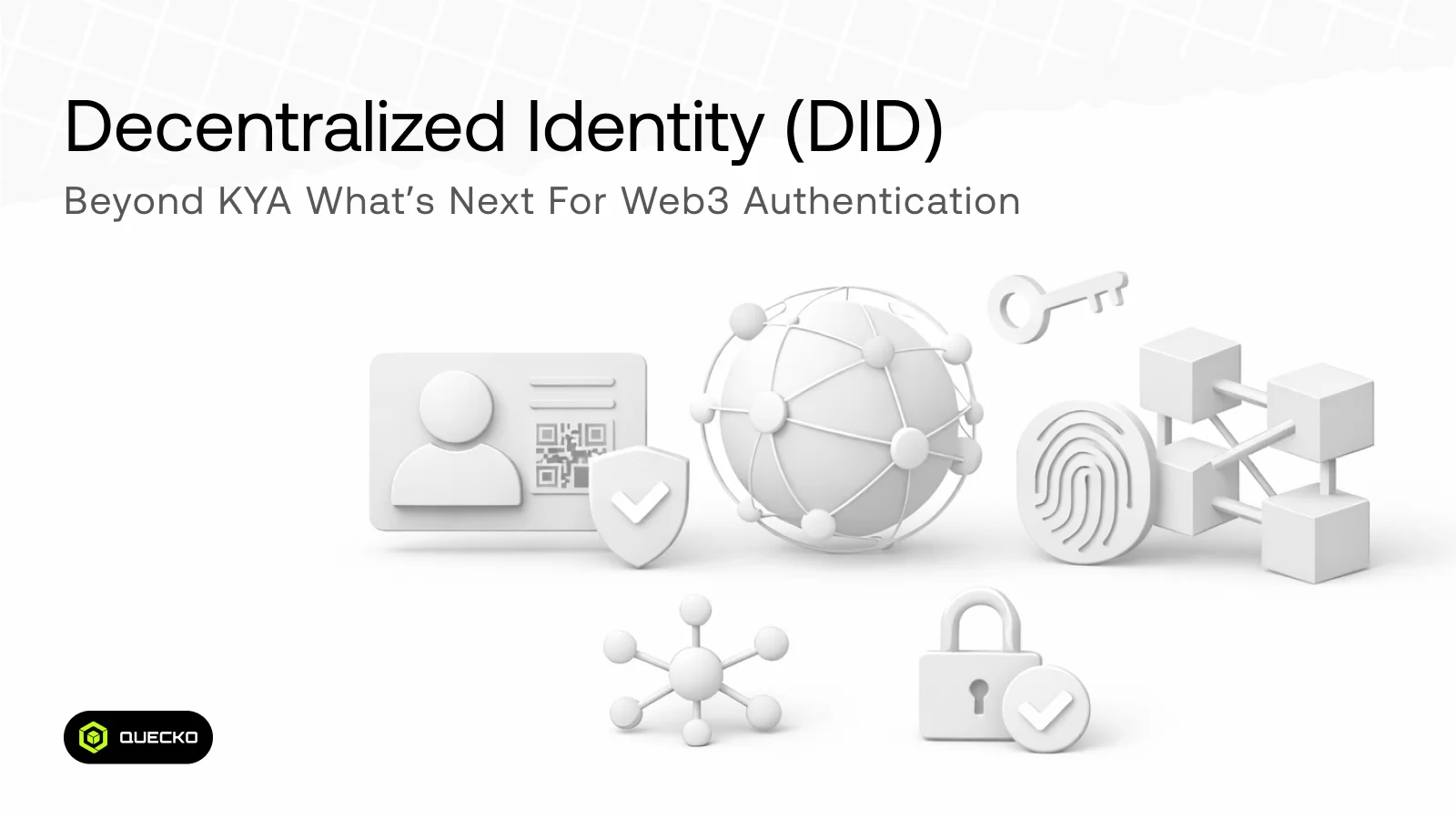
Decentralized Identity in Web3
Decentralized Identity (DID) is a new way to prove your identity online without relying on central organizations or usual login methods. Instead of storing personal information on company servers, decentralized identity allows individuals to control their own credentials using blockchain technology.
In Web3 ecosystems, ID verification can be accomplished with a digital wallet which stores the proof of their verifiable credential. They are authenticated through blockchain technology and cryptographic systems, instead of centralized databases. These solutions allow users to store and control their credentials themselves.
This means that in this method, trust is created by cryptography, not by relying on institutions to handle your personal sensitive data. As Web3 applications continue to grow, decentralized identity is going to be key in the way online authentication, privacy, and digital ownership will function.
Why Traditional Identity Systems Are Failing?
Traditional internet authentication systems rely heavily on centralized storage. When users create accounts on websites, their personal information is stored on the company’s servers. This leads to a major risk where everything can fail at once.
Big data breaches have revealed how weak these systems can be. Hackers frequently aim for centralized identity databases to get sensitive user information.
In order to overcome the cybersecurity threats posed by current centralized systems. Web3 It eliminates central data storage by making use of decentralized alternatives for verifying users’ blockchain technology. With systems like this, individuals can present who they are without giving up any personal data. In turn, maximizing both security and user protection.
How Decentralized Identity Works
Decentralized identity systems operate using blockchain-based infrastructure and cryptographic verification.
Users get special cryptographic IDs that show their identity on different decentralized platforms.
Instead of logging in with usernames and passwords, users authenticate through digital wallets like Veridian Wallet.
Many decentralized identity platforms rely on a distributed ledger to store verification proofs. Identity verification is confirmed across validator nodes.
These identity verification systems can also use Public Key Infrastructure (PKI) trust models. In this setup, authentication gives proof that credentials are real without revealing any private personal information. This creates a system where users keep control of their credentials, while platforms can still confirm trust and authenticity.
Role of Zero-Knowledge Proofs in Web3 Identity
Privacy is one of the biggest demanding situations in digital identity structures. Traditional verification often calls for users to show touchy private files.
This is where Zero-Knowledge Proofs become essential.
Zero-Knowledge Proofs allow a consumer to show that a declaration is true without revealing the actual facts of it. For example, someone could prove they passed an identification without sharing personal files.
The technology continues to advance, so Zero-Knowledge Proofs will become the fundamental security solution for privacy-oriented decentralized identity systems.
In Web3 authentication frameworks, Zero-Knowledge Proofs are mostly used to secure personal information and allow secure verification strategies.
The system provides a major privacy improvement to decentralized identity systems through its advanced technology. As the technology matures, Zero-Knowledge Proofs will play a critical position in making decentralized identification steady and privacy-targeted.
Moving Beyond Traditional KYC in Web3
Most financial platforms today require Know Your Customer (KYC) verification.
Web3 identity systems aim to move beyond this model through decentralized identity protocols.
The verification records are permanently stored on blockchain networks through the verification process which smart contracts execute automatically. This occurs in the system of on-chain KYC attestations.
This approach helps organizations meet regulatory expectations, support Anti-Money Laundering, and comply with Counter-Financing of Terrorism requirements, while still protecting user privacy and reducing onboarding friction. Platforms also enforce Anti-Money Laundering measures across decentralized finance systems. Platforms that expand their operations worldwide and establish offices in Buenos Aires can benefit from using on-chain KYC attestations.
Security Challenges in Web3 Authentication
Although blockchain technology improves transparency, Web3 ecosystems still face security challenges.
Many attacks target vulnerabilities in smart contracts or weak authentication systems. Some exploits occur due to coding issues such as reentrancy bugs, which allow attackers to repeatedly withdraw funds from smart contracts.
To reduce these risks, developers must conduct regular security audits and implement stronger authentication frameworks.
Enhanced Contract-Level Security
Platforms can adopt additional risk controls to prevent contract-level exploits:
- Risk controls such as smart contract whitelisting help restrict unauthorized interactions.
- Monitoring suspicious contract calls can reduce exploit attempts.
- Many attacks begin through abnormal contract calls, making transaction monitoring essential.
- Platforms may enforce smart contract whitelisting to limit interactions to trusted protocols.
Other threats include flash loans, which allow attackers to borrow large amounts of capital instantly to manipulate decentralized finance systems. In some cases, attackers have used flash loans to exploit vulnerabilities in DeFi protocols. Other threats include flash loans and oracle manipulation.
Additional security layers, such as multi-signature wallets, can also help protect user accounts by requiring multiple approvals before transactions are executed.
Monitoring infrastructure is also important. Tools designed for cross-chain bridge monitoring help detect suspicious activity between blockchain networks. This is essential because cross-chain attacks have become one of the most common security threats in Web3 ecosystems. Suspicious activity can be detected by monitoring validator nodes across networks. Logs may include signals like Error reference number or Ray ID for suspicious transactions.
Advanced monitoring systems also support money laundering detection and improve compliance in decentralized finance platforms. Financial platforms may also implement stablecoin risk assessment tools to monitor the stability and transparency of digital asset systems. Compliance includes address screening to prevent fraud in financial transactions.
How AI Is Strengthening Identity Security
Artificial intelligence is beginning to play a major role in protecting Web3 authentication systems.
AI monitoring tools analyze blockchain data to detect unusual patterns and suspicious behaviors. Machine learning models trained with data augmentation techniques can identify threats that traditional systems might miss. Users authenticate through digital wallets like Veridian Wallet for secure credential management. Transactions are validated through smart contracts.
- Advanced monitoring uses behavioral interpretation techniques to detect suspicious identity activity.
• Logs may record signals like Error reference number events during authentication failures.
Some security systems monitor server activity and blockchain interactions linked to a Requested URL or infrastructure signals like a Server ID. These signals help detect abnormal login attempts or malicious requests, including those on devices running Android 10. Some systems monitor server activity and blockchain interactions linked to the Requested URL or the Ray ID.
The automated systems operate as AI defenses which continuously monitor network operations to identify and stop security threats at their early stages.
The expansion of Web3 ecosystems requires AI-based monitoring systems to establish a fundamental identity protection framework. AI systems also automate address screening to flag suspicious activity.
Protecting Web3 Identity Infrastructure
Decentralized identity systems operate under the need for strong security practices to function effectively.
Developers need to create protective measures which shield their systems from sophisticated cyber attacks. The latest security threat involves attackers who target authentication systems instead of stealing financial assets.
Security teams need to perform ongoing system testing while introducing advanced cryptographic safeguards to protect against these threats.
Researchers study quantum-resistant algorithms. They develop these to protect blockchain systems from quantum computing threats that will appear in the future.
The integration of decentralized identity systems with advanced cryptographic protection enables Web3 platforms to develop authentication systems which maintain their security over extended periods.
The Rise of Networked Identity
The future of decentralized identity lies in interconnected verification systems.
Instead of managing separate identities across different platforms, users will have identities that work across multiple blockchain networks.
This concept is known as Networked Identity.
This model enables credentials to flow effortlessly between identity networks, which lets users authenticate different applications without needing to verify themselves multiple times.
The platform provides a system which permits credentials to establish trust on every other platform after receiving verification on one platform.
Users access their digital wallets to control their credentials, which deliver secure and smooth authentication throughout Web3 ecosystems.
The Future of Web3 Authentication
The Web3 internet depends on decentralized identity as a fundamental technology which is rapidly gaining adoption.
Users will have portable credentials as their future authentication method. This will replace current centralized login systems to provide secure and private platform access.
Zero-Knowledge Proofs technology development will enhance privacy protection while eliminating the need for centralized data storage.
Combined with AI monitoring systems, blockchain infrastructure, and decentralized verification frameworks, Web3 identity systems will help create a safer and more user-controlled internet.
The combination of AI monitoring systems, blockchain infrastructure, and decentralized verification frameworks will enable Web3 identity systems to build a secure internet that gives users total control over their data.
As adoption grows, decentralized identity will likely become the standard method for authentication across decentralized platforms, digital finance systems, and online communities.
Conclusion
The internet has established a new trust system through decentralized identity technology. Web3 authentication systems provide users with credential control and blockchain verification, which eliminates multiple security flaws that exist in standard identity systems.
The development of Zero-Knowledge Proofs and AI monitoring systems, and decentralized verification frameworks will lead to identity systems that provide better security and privacy, and operational efficiency.
Authentication systems will move away from password-based verification and centralized database systems in the future. Decentralized identity systems will establish improved security measures and user control in digital environments.
Frequently Asked Questions
1. What makes Quecko a strong partner for blockchain solutions?
Quecko is a strong partner for blockchain solutions because it combines Web3 expertise with real project experience. The team has worked on platforms like NFT marketplaces, DEX, and prediction markets, and builds secure systems using smart contracts, Decentralized Identity (DID), and Web3 authentication.
2. What is decentralized identity in Web3?
People can manage their digital credentials through decentralized identity systems, which operate independently from any centralized organization. Verification happens through blockchain networks, which function independently from the traditional database systems.
3. How do digital wallets support decentralized identity?
Digital wallets function as storage systems, which store authentication credentials. The system gives users a protected verification method to authenticate their identity while they operate decentralized applications.
4. Why are Zero-Knowledge Proofs important for identity verification?
The concept of Zero-Knowledge Proofs allows users to demonstrate their data authenticity while keeping the actual data hidden from view. The protocol provides better privacy protection and security measures for digital identity systems.
- 5. Can Quecko help build decentralized identity and Web3 authentication solutions?
Yes. Quecko creates blockchain systems, smart contract solutions, and Web3 applications, which enable decentralized identity platforms and secure Web3 authentication. The team specializes in blockchain infrastructure to develop identity solutions. These protect privacy and support scalability.
Author

Khola Abbasi
Blockchain & Crypto Marketing SpecialistI create content at the intersection of blockchain, community, and strategy—translating complex DeFi and smart contract concepts into clear, engaging narratives. Passionate about decentralized ecosystems, I focus on driving adoption through clarity and connection.
Date
1 minute agoShare on

Related Blogs
Decentralized Identity (DID) Beyond KYA: What’s Next for Web3 Authentication
1 minute ago
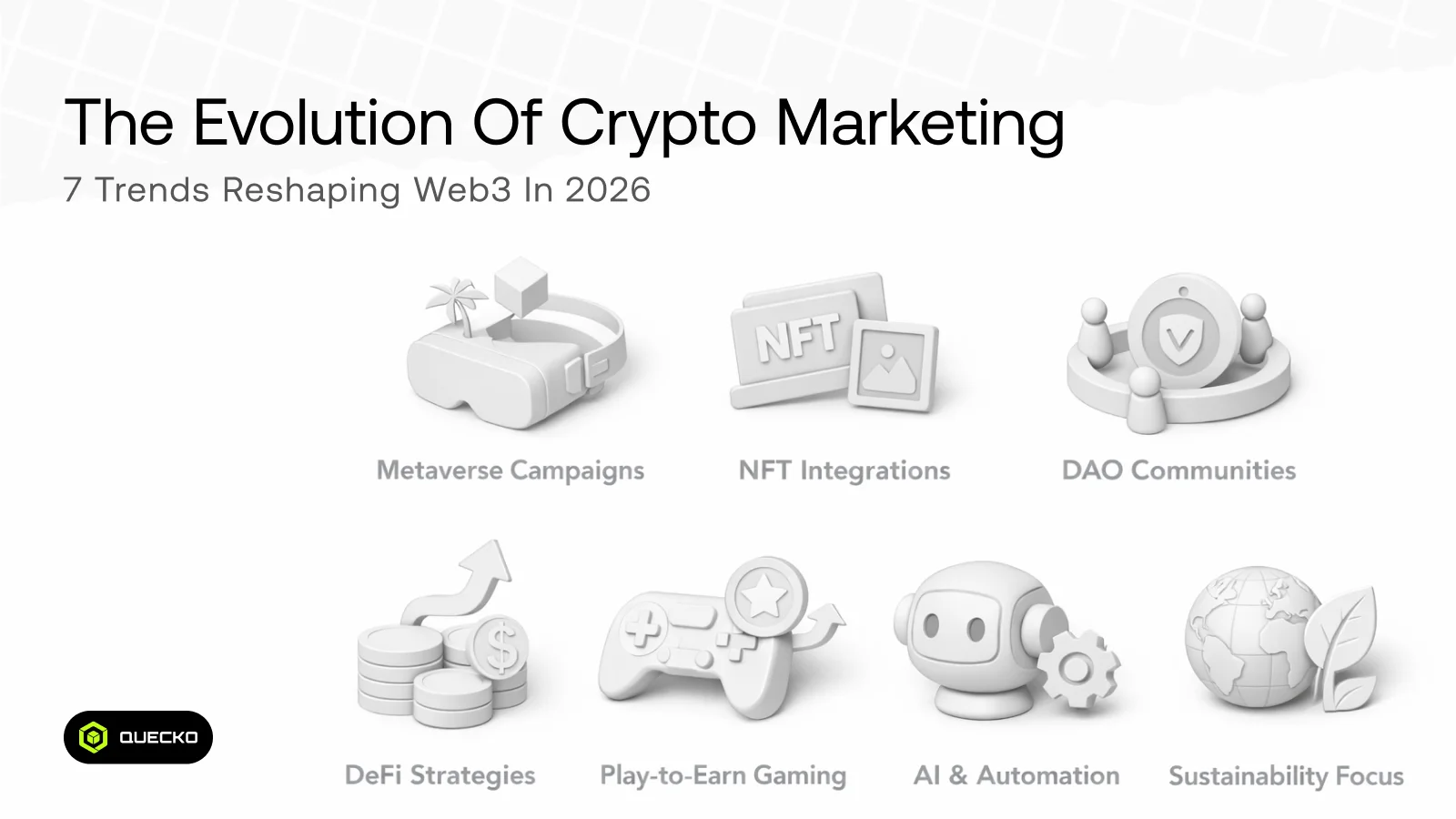
The Evolution of Crypto Marketing: 7 Trends Reshaping Web3 in 2026
24 hours ago
Privacy-Preserving AI Techniques – An A to Z Guide
2 days ago
Cross-Chain Oracles: How Reliable Data Powers DeFi Applications
6 days ago








 +971-50-740-0268